Episode 8 companion
The Printer Was Never the Finish Line
The first Jam season started with a printer, a pun, and an accidental shot of my feet. It ends by asking which frontline device problem has earned the right to come next.
At a glance
The short answer
Printers came first because frontline work already depends on labels, receipts, wristbands, and shipping output, so downtime has immediate consequences. RFID, sensors, access control, and cameras were categories under consideration when this was recorded, not promised support. Customer need should decide what comes next.
Recorded-time future direction: Episode 8 describes my vision when the video was recorded. References to RFID, sensors, access control, cameras, timing, platform naming, or a broader IoT direction are examples we were considering. They are not claims of current support, a support matrix, or release commitments. Verify current official Omnissa information before making product or deployment plans.
The first Jam season started with a printer, a pun, and an accidental shot of my feet. Naturally, it ends by opening the door to nearly every connected thing in a building.
That is what happens when you say IoT. The list of nouns gets out of hand very quickly.
Product names, priorities, timing, and availability may have changed since I recorded this episode. What has not changed is the product question underneath it: why did printers earn the first spot, and what would another device category have to do to earn the next one?
Printers were a practical first step
We did not start with printers because they make the flashiest futuristic-device poster.
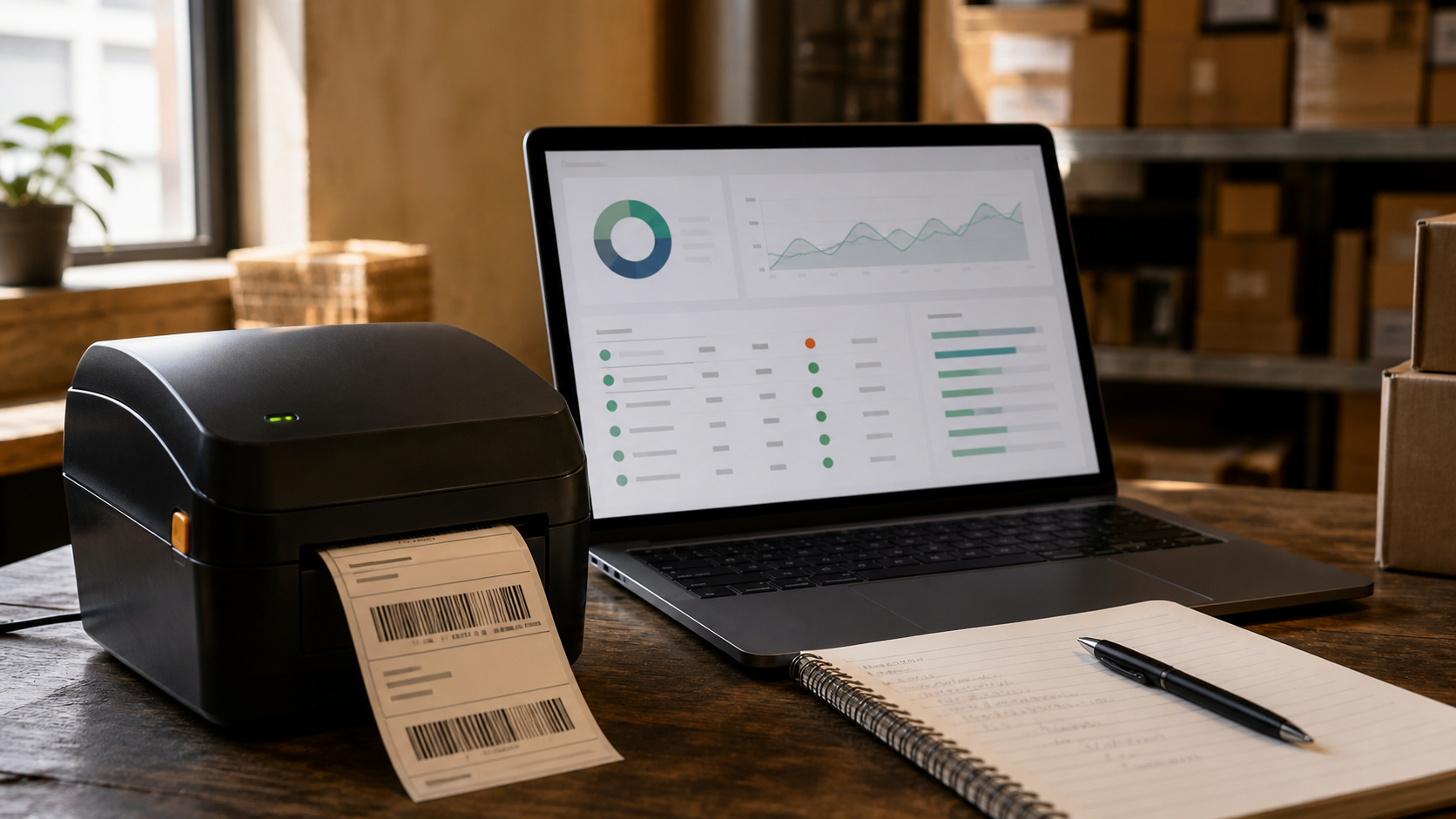
We started there because frontline work already depends on them. Online orders still need receipts and labels. Buy-online-pick-up-in-store needs the correct item identified. Merchandise gets labeled. Packages need shipping labels. Healthcare, logistics, retail, and delivery all rely on printed information moving something physical to its next step.
Digital commerce did not remove the printer. In many cases it created one more physical handoff that needed a label.
Printers also gave us a known management problem with plenty of device variety and very real consequences when something stops working. That is a better foundation than collecting device categories merely because we can put them under an IoT heading.
The recorded goal was to go deep: improve the management experience, support more manufacturers as the ecosystem allows, and keep building useful capability around the printers customers already depend on.
RFID was the next serious conversation
At recording time, RFID was the clearest category I expected us to examine next. I mention Zebra's RFD40, other RFID hardware, and headless RFID readers.
I was seeing RFID use grow across frontline environments, so it deserved serious attention.
That sentence is intentionally different from saying every RFID device was supported, committed, or attached to a date. A noun appearing in a roadmap conversation does not turn it into a shipping integration. It means the customer use was visible enough for us to investigate the management problem.
Then every connected device raises its hand
The moment you say IoT, almost anything with a network connection volunteers for the roadmap.
The recording mentions temperature gauges, smart access control, and CCTV cameras as categories we had looked at. Those devices share far less than a slide titled "IoT" might suggest. One reports an environmental condition. One controls entry. One captures video.
"Connected" does not tell us which data matters, what an administrator needs to know, which actions are safe, or how that device belongs in a real workflow. That is the actual product work.
In the video I use a crowded store at Christmas as an example. A sensor reports how many people are entering. Could another system use that information to adjust the temperature as occupancy changes? Maybe. It is an interesting workflow, but it could require third-party connectors and several systems working together. I did not present it as a finished feature.
Before reaching for that broader automation, I would still ask the boring questions first. Can the sensor be managed? Can an administrator tell whether it is online? Can we receive useful data from it? Can that data safely trigger something elsewhere?
The boring questions are usually where the useful product begins.
I do not want a roadmap made of nouns
I called the recorded roadmap agile because I did not want to pretend the category after RFID was fixed forever.
The filter was customer use. Find a device category that matters in frontline environments. Understand the operating problem. Then build enough management depth to make a real difference.
"We also support cameras, sensors, readers, and every other connected thing" can make a lovely slide. It does not help an administrator unless the product understands what those devices do and can solve a recognizable problem around them.
If customers point us toward a stronger problem somewhere else, the roadmap should be allowed to respond.
That is how I wanted to end the season: go deep enough to make printer management genuinely useful, then let the next category earn its place for a reason.
For the thinking that leads into this finale, start with Episode 7's recorded printer roadmap.
That is Season 1. If the next season reaches far enough beyond printers, I may need another name for the Jam. I reserve the right to make another bad pun.
Until next time, take care.
Skip around
Chapters
- 0:00Season finale and the broader vision
- 0:17Printers as the foundation, not the finish line
- 0:36RFID as the next area under consideration
- 1:06Sensors, access control, cameras, and other possibilities
- 1:25Let customer use shape the roadmap
- 1:41Why printers were the natural first step
- 2:18Beyond printers and frontline use cases
- 3:03An agile, demand-led future direction
The words, without pressing play
Transcript
Reviewed against the recording, with punctuation and formatting added for readability. The claims and caveats are unchanged.
[00:07] Hey folks. Welcome to the last episode of Printer Jam Session. It's been a pleasure being on this journey with you. Today, I wanted to have a quick episode talking about the IoT platform.
[00:18] As I think I've mentioned in most of the episodes, the platform we've built starts at printers, and we will take printers to as much depth as we can from support perspective, from future perspective, from expansion of OEM perspective.
[00:34] But here's a quick look on, you know, what's in the next six to 12 months. So right after printers, our goal is to look at RFID devices, namely starting off with something like RFD40 that Zebra offers. But we're also open to looking at other RFID devices that we will be supporting as we see a continued uptick in RFID just in general across the board. And that doesn't limit us to just devices. We've also looked at headless RFID readers.
[01:07] We've looked at temperature gauges. We've looked at smart access control. We've looked at CCTV cameras. So I think, you know, as this roadmap evolves, and it will evolve because once we say IoT, really the floodgates open into what devices we can support.
[01:22] But we have a pretty straightforward goal. We want to support where we see the most use by customers. And I think we decided that printers, some may consider IoT, some may consider a little different than IoT, but, you know, we think it's a good place to start because it is a known quantity. And there are many, many different types of printers and printers are here to stay.
[01:44] We saw this with, you know, right after COVID and in this day and age where there's so much online delivery, there's so much, you know, food deliveries, there's buying online, picking up in store, everything has a receipt, everything is printing labels to put on merchandise, shipping, things like that, you know, in retail, logistics, healthcare, wherever you look, you see labels. So, it was, you know, naturally a first step for us. And so we're almost at the, I would say, finishing end of launching printers.
[02:15] But that doesn't mean we stop here. We want to support it, as I said, you know, in depth. But as we move forward from here, I think our vision really expands into all the use cases that we see. We see use cases like, hey, you know, when I walk into a store on Christmas, right, there's, there's a lot of people walking in. And so based on a sensor that tells you how many people walk in, can I automatically change the temperature that's in here, right? Now, of course, this may rely on third-party connectors. This may rely on different systems working together. But the point is, can those sensors be managed and adequately managed? Do you want to know they're up and running, or whatever data they can provide?
[02:58] So, you know, I think for this episode, and for the IoT roadmap, stay tuned with us, because it will be very agile for us. We have, you know, a vision of where we want to go with this. But this vision is also very agile in the sense that we're happy to respond to what we see on the market demands. And so for now, that's been printers, that's been RFID readers. But, you know, you'll see a second part of this episode, which comes out in a few months, which will show you the concrete vision of where we're going right after that.
[03:32] So anyway, with that, you know, comes an end to season one of the Printer Jam Session. Maybe it won't be called the Printer Jam Session, and some other witty, you know, name for supporting that whole IoT platform. But thank you again, I hope you continue to, you know, invest into Omnissa. I hope you, with this series, have the confidence that, you know, we're putting our best foot forward in really making this platform the best platform we can. And hopefully, I'll see you around in the forums and talk to you. Until next time, take care, see you and stay safe.
Have a thought?
Comments
Agree, disagree, or tell me what I missed. I read comments before they appear here.
Loading comments…