Episode 1 companion
Welcome to the Jam: My Hot Take on Printer Management
Fifteen years ago, Android fragmentation made device management feel like a collection of exceptions. Printer management gives me the same feeling, except now there are label rolls involved.
At a glance
The short answer
Modern printer management treats supported frontline printers like managed endpoints: enroll them, apply configuration and firmware, monitor availability, and use their data in Workspace ONE. In this series, MQTT provides a shared communication layer without pretending every printer, capability, or support requirement is identical.
This is Part 1 of the Welcome to the Jam printer management series.
There is a lot of talk about modern device management. Printers, at least to me, still feel stuck in the past.
This series is me taking that hot take out of the conference room and putting it in front of actual printers.
Welcome to Welcome to the Jam. No pun intended. Okay, maybe it was.
Across eight short episodes, I'll walk through the printer management approach we're building with MQTT in Omnissa Workspace ONE UEM. I do not just want to show you where to click. I want to explain why we made certain choices, then put those choices in front of real hardware.
Slideware is easy. Printers are less cooperative.
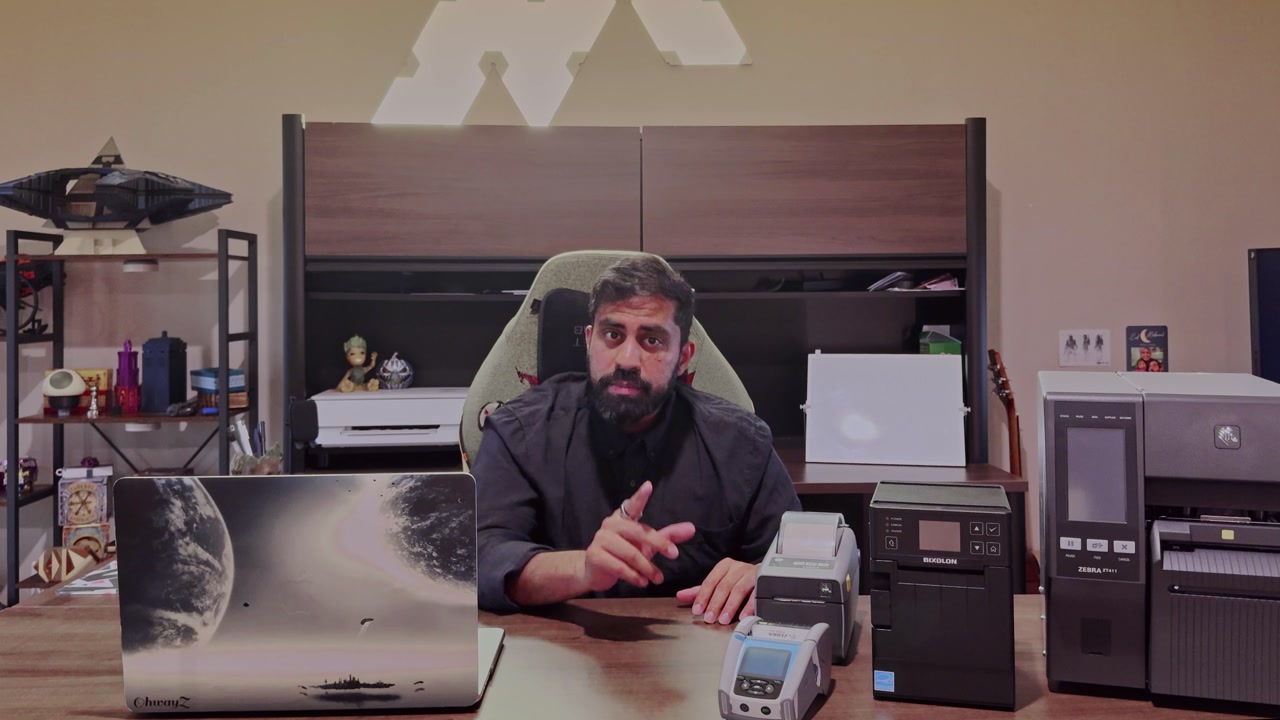
The opening video is under three minutes. It also includes an accidental shot of my feet. Apparently that is how I decided to introduce a modern management series.
My hot take
Printer management has not evolved at the same pace as the rest of device management.
I started my EMM and MDM journey about 15 years ago. Back then, Android fragmentation was the problem. Behavior changed from one OEM to the next. Something that worked perfectly on one device might behave very differently on another because the common standards were not doing enough yet.
If you were there, you remember.
That is what printer management feels like today.
There are printer manufacturers doing genuinely good work and pushing things forward. What the space lacks is a unifying force. There is no Google equivalent pulling the whole ecosystem toward the same baseline.
When an OEM invests in management and integration, it shows. When it does not, administrators inherit the gaps. An integration that looks fine in a small test can become much harder to trust as the fleet grows.
EMM and MDM have already lived through a version of this story. So the question I keep coming back to is: if the printer space itself is not very modern, how do you build something modern on top of it?
That is what this series is really about.
What you will see
We will start with the Connector model, why it helped, and where it adds cost and complexity. Then we will get into MQTT and why it matters for the approach we are taking.
After that, things get practical. I will show wired and wireless enrollment using actual printers, look at what administrators can do once a printer is visible to the platform, and talk about where this could go next.
Some episodes stay at the product level. Others involve me heading into the basement, picking up a printer, and working through the process.
I also know that committing to eight episodes about printer management is a lot to ask. I love the sound of my voice, but I will not assume you do. The videos range from under three minutes to about ten, so I will keep them focused and useful. These written companions are here when the workflow needs a little more context.
Where we start
The word "modern" is doing a lot of work here. It does not make fragmentation politely leave the room. We still need a common way for the platform and supported printers to communicate, then we need to test it against the work administrators actually do.
That common language is MQTT. I do not expect one protocol to fix an entire market. I do think it gives us a better starting point than accepting a different management experience for every printer forever.
If printer management is already part of your job, compare this with what you see in the field. If it is not, stick around anyway. You may recognize more of the old EMM and MDM story than you expect.
One bit of housekeeping: this series shares product context and recorded demonstrations. It is not the support matrix. For current availability, supported devices, and setup requirements, use the official Omnissa documentation.
Welcome to the Jam. Yes, the pun was intentional.
Have a thought?
Comments
Agree, disagree, or tell me what I missed. I read comments before they appear here.
Loading comments…